

Few things ruin a morning faster than turning the key and hearing nothing but a click. If you’re dealing with that right now in Fishers, or you just want to be ready before it happens, this guide covers everything from spotting a dying battery early to testing it yourself, jump-starting it safely, and knowing exactly when it’s time to call a car battery service in Fishers instead of fighting it alone in a parking lot.
Whether you’re heading out from a driveway near Geist Reservoir on a fifteen-degree January morning or trying to leave a shift near the Nickel Plate District after work, a dead battery has a way of showing up at the worst possible moment. The good news is that most battery failures give warning signs, and most of the fixes are more manageable than people expect once you know what you’re doing.
Why Car Batteries Fail More Often in Fishers, Indiana
Indiana’s climate is genuinely tough on car batteries, and Fishers is no exception. The Hamilton County area regularly swings between humid, ninety-degree summers and bitter winter cold snaps that can drop well below freezing overnight. That swing matters more than most drivers realize.
Heat is actually the bigger long-term enemy. High summer temperatures accelerate the chemical reactions inside a battery and speed up the evaporation of internal fluid, which quietly shortens its usable life even though the symptoms don’t show up until winter. Cold weather is when the damage becomes obvious, because a battery that’s already lost a chunk of its capacity over the summer simply doesn’t have the reserve power needed to crank a cold engine.
A few other local factors play a role too:
- Short commutes around Fishers and the surrounding suburbs don’t give the alternator enough time to fully recharge the battery between drives.
- Vehicles that sit for a few days at Hamilton Town Center, a park-and-ride, or in a garage during a work trip can lose charge from parasitic drains (alarms, infotainment systems, trackers).
- Older vehicles, or batteries that are already three to five years old, are far more likely to fail during a sudden cold snap than a fresh battery would be.
Signs Your Car Battery Is Dying Before It Leaves You Stranded
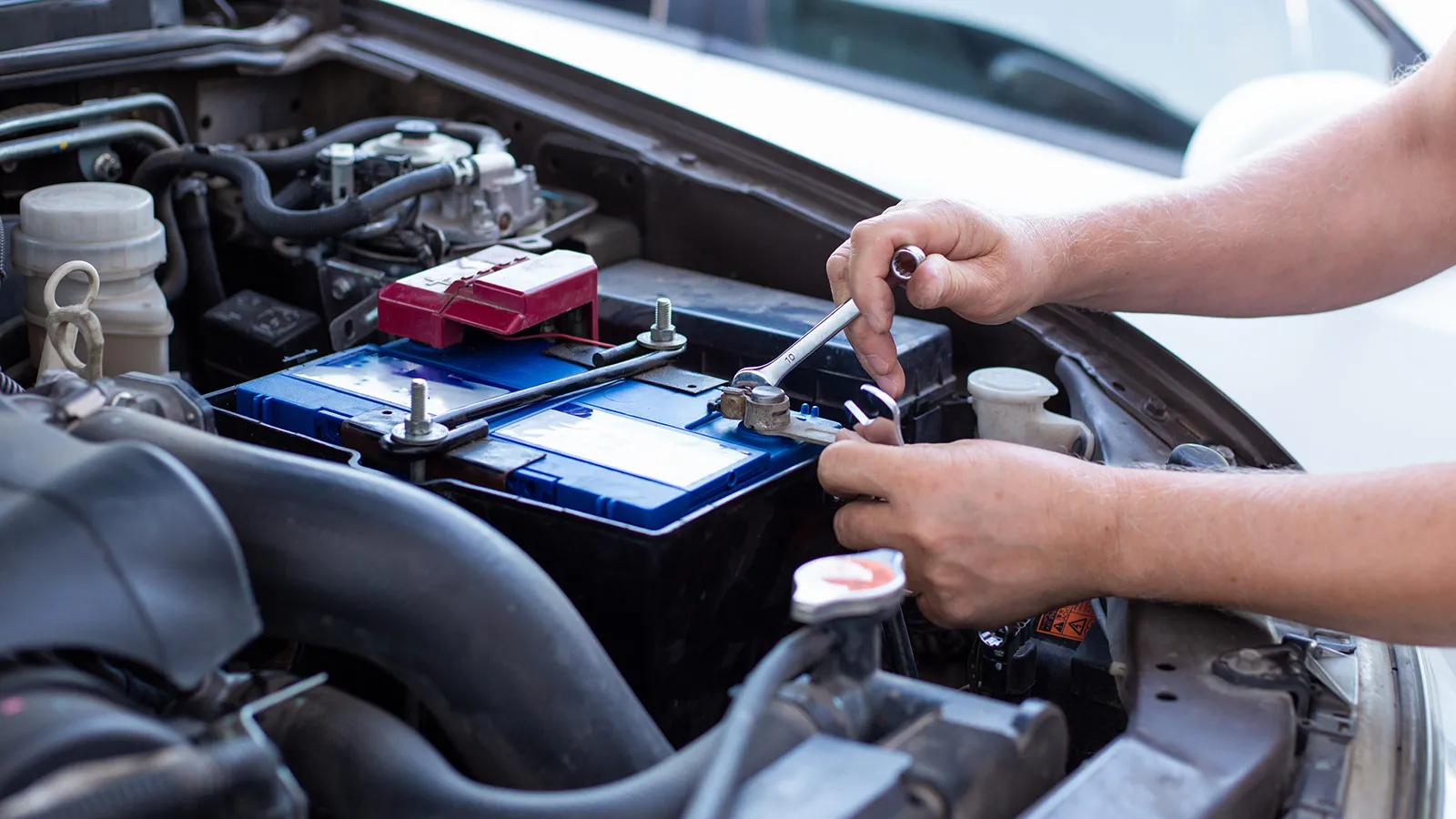
A battery rarely fails without warning. It usually sends signals for days or even weeks beforehand. Catching these early can be the difference between a planned replacement and an emergency call from a cold parking lot.
Watch for:
- Slower than normal engine cranking, especially first thing in the morning
- Dashboard warning lights, particularly the battery icon, flickering or staying lit
- Dimming headlights or interior lights when the engine is idling
- A clicking sound when you turn the key instead of the engine turning over
- A swollen, misshapen battery case or a strong rotten-egg smell near the engine bay
- Visible corrosion, a white or bluish crust, building up on the battery terminals
- The need to jump-start the car more than once in a short period
If two or more of these sound familiar, treat it as an early warning rather than a coincidence. A battery on its way out rarely gets better on its own.
How to Check Car Battery Health at Home
You don’t need to be a mechanic to get a decent read on your battery’s condition. Here’s how to check a car battery using two different methods, depending on what tools you have on hand.
How to Test a Car Battery With a Multimeter (Step-by-Step)
This is the most accurate way to check a battery without professional equipment, and it takes about five minutes.
- Turn off the engine and all accessories, and let the car sit for at least ten minutes so the reading isn’t skewed by recent driving.
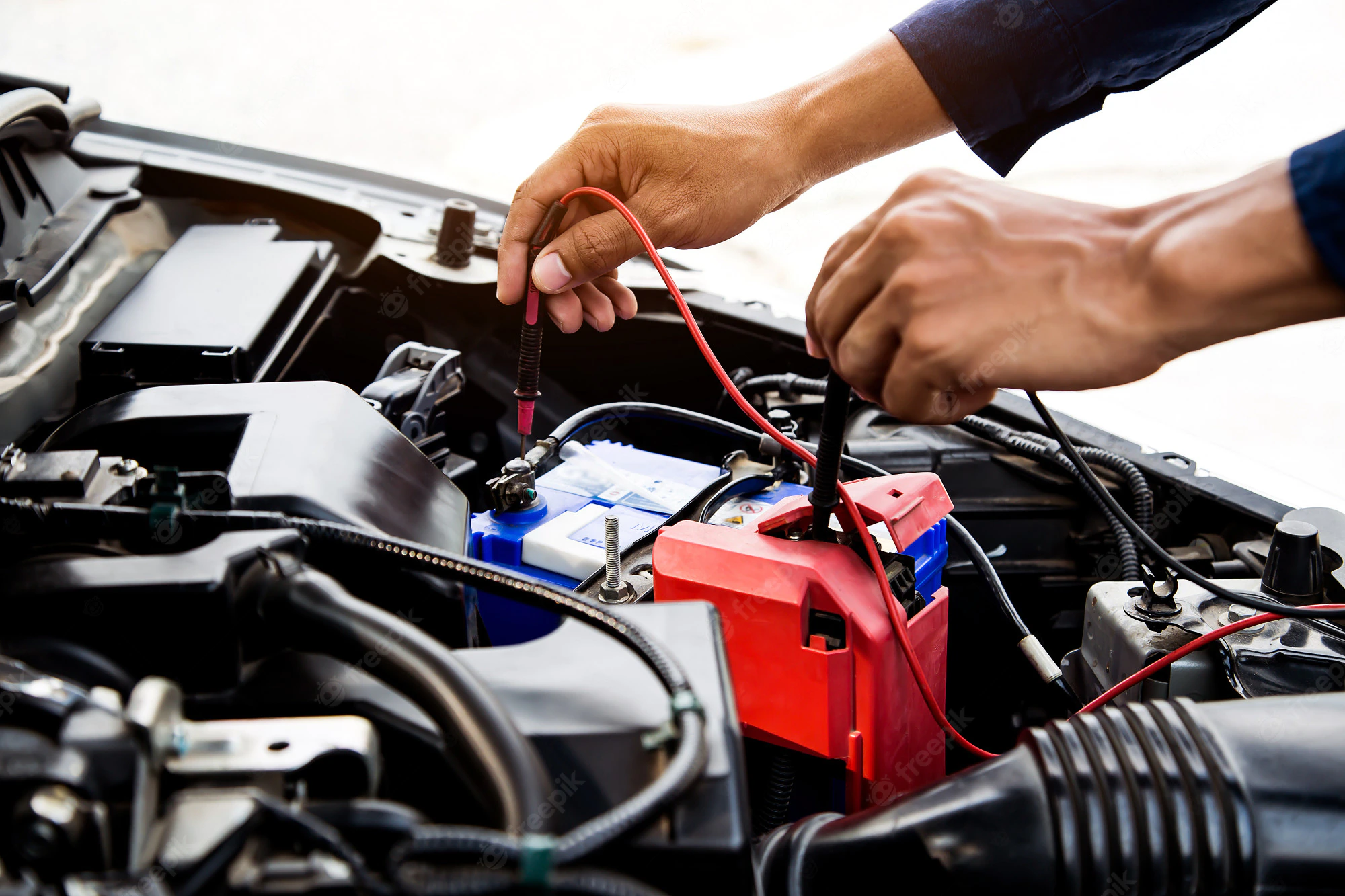
- Set your multimeter to DC volts, usually the 20V setting.
- Touch the red probe to the positive terminal and the black probe to the negative terminal.
- Read the display. A healthy, fully charged battery should read around 12.6 volts or higher. A reading between 12.2 and 12.4 volts suggests a partial charge, and anything under 12 volts usually points to a battery that needs charging or replacing.
- For a more complete picture, have someone start the engine while you watch the voltage. It should jump to somewhere between 13.7 and 14.7 volts, showing the alternator is charging properly. If it doesn’t rise, the issue might be the alternator rather than the battery itself.
How to Check a Car Battery Without Tools
If you don’t have a multimeter handy, there are still a few reliable ways to check a car battery:
- Turn on the headlights with the engine off. If they look noticeably dim, the battery is likely weak.
- Listen to the engine crank. A slow, labored crank is one of the clearest signs of a struggling battery.
- Look at the terminals for corrosion, which can mimic the symptoms of a dead battery even when the battery itself is fine.
- Check the manufacturer’s date sticker on top of the battery. Most batteries last three to five years, and anything older than that deserves a professional test even if it seems fine today.
How to Jumpstart a Car the Right Way
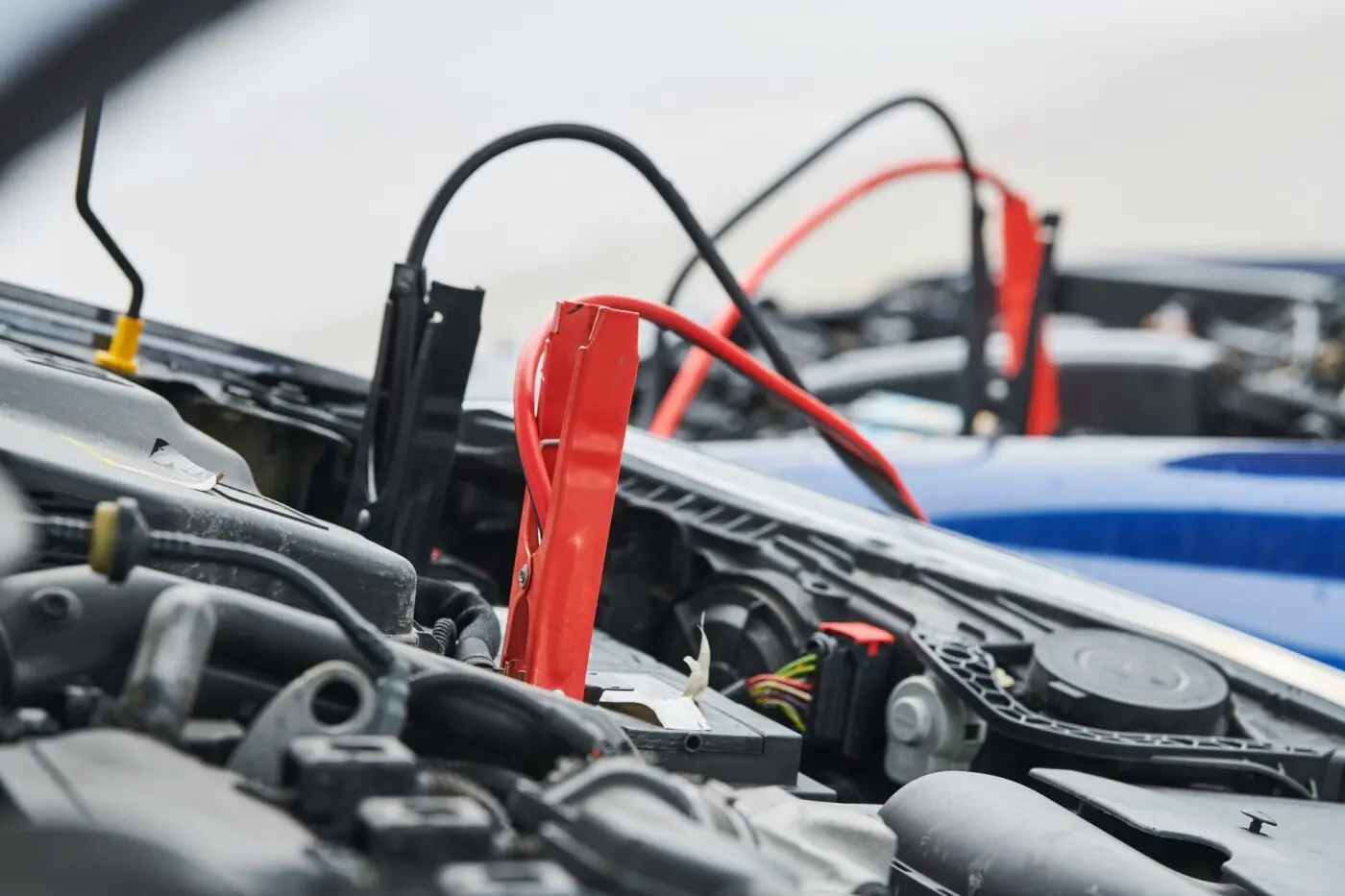
Knowing how to jump start a car safely is one of the most useful skills a driver can have, but doing it in the wrong order can damage the electrical system of either vehicle. Here’s the safe sequence:
- Park the working vehicle close enough that the jumper cables reach, but make sure the two cars are not touching.
- Turn off both engines and put both vehicles in park (or neutral for manual transmissions), with the parking brake engaged.
- Connect the red clamp to the positive terminal of the dead battery.
- Connect the other red clamp to the positive terminal of the working battery.
- Connect the black clamp to the negative terminal of the working battery.
- Connect the final black clamp to an unpainted metal surface on the dead car’s engine block, away from the battery itself. This last connection point matters, since attaching it directly to the dead battery’s negative terminal increases the risk of sparking near battery gases.
- Start the working vehicle and let it run for a couple of minutes.
- Try starting the dead vehicle. If it starts, let both cars run for several minutes before disconnecting the cables in reverse order.
- If the car doesn’t start after two attempts, stop. Repeated attempts can strain the starter motor, and at that point the battery likely needs replacement rather than another charge.
A jump start is a temporary fix, not a repair. If the same battery needs jumping again within a few days, it’s telling you it’s done.
How to Change or Replace a Car Battery in Fishers (Step-by-Step)
Once testing confirms the battery itself is the problem, replacing it is a task many drivers can handle in fifteen to twenty minutes with basic tools. Here’s how to change a car battery, and how to replace a car battery safely without damaging your vehicle’s electronics.
Tools you’ll need:
- A wrench or socket set matching your terminal bolts
- Gloves and eye protection (battery acid is corrosive)
- A wire brush or terminal cleaner for corrosion
- The correct replacement battery for your make and model
Steps:
- Turn off the engine and remove the key.
- Locate the battery and identify the negative (usually black, marked with a minus sign) and positive (usually red, marked with a plus sign) terminals.
- Disconnect the negative terminal first, always. This single step is the most important safety rule in the entire process, since disconnecting negative first reduces the risk of a short circuit if a tool accidentally touches metal.
- Disconnect the positive terminal second.
- Remove any clamp or bracket holding the battery in place, then lift the old battery straight out. Batteries are heavier than they look, so lift with your legs, not your back.
- Clean the tray and terminal connectors if there’s any corrosion buildup.
How to put a battery in a car once the old one is out:
- Set the new battery into the tray, making sure it sits flat, and the terminals line up in the same orientation as before.
- Secure the hold-down clamp or bracket so the battery can’t shift while driving.
- Connect the positive terminal first this time, the reverse order from removal.
- Connect the negative terminal last.
- Give both connections a gentle tug to confirm they’re snug, then start the car to confirm everything is working.
If your vehicle has a lot of onboard computer settings (clock, radio presets, adaptive systems in newer cars), disconnecting the battery can reset some of them. That’s normal and not a sign anything went wrong.
When DIY Isn’t Enough: Why Call a Mobile Battery Service in Fishers
DIY testing and jump starts work well for a lot of situations, but there are times when calling a professional mobile battery service in Fishers is genuinely the smarter move, not just the more convenient one.
Consider calling instead of handling it yourself if:
- You’re not confident identifying the correct replacement battery group size or CCA rating for your vehicle
- Your car has stop-start technology, hybrid components, or advanced driver-assist systems that are sensitive to incorrect battery disconnection
- The battery is leaking, swollen, or smells strongly of sulfur, which can indicate a hazard beyond a simple swap
- You’re stuck somewhere with limited lighting, no flat surface, or heavy traffic nearby
- You’ve already tried jump-starting twice without success
A mobile technician brings a battery tester, the correct tools, and the experience to diagnose whether it’s really the battery, or whether it’s the alternator, a parasitic drain, or a bad ground connection instead. Guessing wrong on that distinction is one of the most common and costly DIY mistakes.
What to Expect From Our Emergency Battery Service in Fishers
When you call for an emergency battery service in Fishers, the process is built to get you back on the road with as little disruption as possible.
- Fast response: Technicians are dispatched to your exact location, whether that’s a driveway, an office parking lot, or the shoulder of a road near the Fishers Test Facility corridor.
- On-the-spot diagnostics: A proper battery and charging system test happens before anything is replaced, so you’re not paying for a new battery when a jump start and a charging system check would solve it.
- Stocked replacement batteries: Common battery groups for popular makes and models are typically carried on the service vehicle, so most jobs are finished in one visit.
- Safe installation: Old batteries are removed and handled properly, terminals are cleaned, and the new battery is torqued and tested before the technician leaves.
- 24/7 availability: Battery failures don’t wait for business hours, and neither does the service.
How Much Does Car Battery Replacement Cost in Fishers?
Pricing depends on a few factors: the battery group size your vehicle requires, whether it’s a standard flooded battery or an AGM (absorbent glass mat) battery, and whether same-day mobile installation is included. As a general range, most standard vehicle batteries with mobile installation fall somewhere in the low-to-mid hundreds of dollars, with AGM batteries and larger trucks or SUVs typically landing on the higher end of that range.
The honest answer is always more useful than a fake flat rate, and a reputable service should be willing to give you a straightforward quote over the phone once they know your vehicle’s year, make, and model, rather than a vague estimate.
Choosing the Right Replacement Battery for Indiana Weather
Not every battery is built the same, and the right choice matters more in a climate like Fishers experiences than in milder regions.
- Cold Cranking Amps (CCA): This rating measures how much power a battery can deliver in cold temperatures. For Indiana winters, choosing a battery at or above the CCA rating recommended by your manufacturer, rather than the bare minimum, gives you a real safety margin during hard freezes.
- AGM vs. flooded lead-acid: AGM batteries handle heat and vibration better and are increasingly standard in vehicles with stop-start systems, though they cost more upfront. Flooded batteries remain a reliable, budget-friendly option for many older vehicles.
- Battery age and warranty: A longer free-replacement warranty period is generally a sign of a more durable battery, and it’s worth the modest price difference for most drivers.
Why Fishers Drivers Trust Local Mobile Battery Service
Local experience counts for more than people expect when it comes to something as basic-sounding as a battery. Technicians who work Fisher’s routes regularly know the neighborhoods, the seasonal patterns, and the common vehicle issues in the area, from commuter sedans running the daily loop on 116th Street to work trucks parked overnight near job sites.
What tends to build trust over time isn’t flashy marketing; it’s consistency: showing up when promised, giving an honest answer even when it means recommending a cheaper fix, and being available at two in the morning just as reliably as at two in the afternoon. That combination of technical know-how and straightforward communication is what turns a one-time roadside call into a driver’s go-to number the next time something goes wrong.
If your battery is showing warning signs, or you’re already stuck, don’t wait until it strands you somewhere worse. A quick call for a car battery service in Fishers can usually get you back on the road faster than you’d expect, often with a same-visit fix.
FAQ’s
How long does a mobile car battery service visit take in Fishers?
Most battery diagnostics and replacements take between 20 and 40 minutes once the technician arrives. Diagnostics alone are often quicker, while a full replacement includes testing, removal, installation, and a final charging system check before the technician leaves.
Can a car battery jump start in the rain or snow?
Yes, but with extra caution. Keep cable clamps away from water pooling near terminals, avoid touching metal parts of the clamps together, and dry the terminals first if possible. If conditions feel unsafe, it’s better to call a mobile technician than risk a shock or short circuit.
How often should I replace my car battery in Indiana?
Most batteries in Indiana’s climate last three to five years due to the seasonal heat and cold swings. Batteries older than four years should be tested before winter each year, since sudden cold snaps are the most common trigger for battery failure.
Do you offer emergency battery service at night in Fishers?
Yes, emergency battery service is available 24 hours a day, seven days a week throughout Fishers and the surrounding area, since dead batteries don’t follow a schedule and often show up during commutes or overnight parking.
Will jumping starting my car damage the battery or alternator?
A properly performed jump start, following the correct cable order, rarely causes damage. Repeated jump starts on the same failing battery, however, put extra strain on the starter motor and alternator, which is a sign the battery itself needs replacing rather than another boost.
Is it cheaper to jump start my car or replace the battery?
A jump start is almost always the cheaper short-term option, but it only works if the battery still holds some charge. If a battery needs jumping repeatedly within days, replacement ends up being the more cost-effective choice, since repeated jumps don’t fix an underlying failing cell.