
You hear a thump, then a flapping sound, and the steering wheel starts pulling to one side. Maybe you’re on I-465 with trucks passing at 65 mph. Maybe you’re in a Broad Ripple parking lot with a screw in your tire and a dinner reservation in 20 minutes. Either way, the next few minutes matter more than the repair itself.
This guide covers what to do first, when to call for help, what a roadside assistance call for a flat tire actually includes, what happens if you don’t have a spare, and how to stay safe while you wait. It also covers a few Indianapolis-specific details, like the free state help that exists on some interstates.
Quick Takeaways
- Slow down gradually, get out of traffic, turn on your hazards, and don’t keep driving on a fully flat tire.
- If you’re on a busy road, call for help and stay clear of traffic instead of changing the tire yourself.
- Roadside assistance can usually change a flat with your spare, patch or plug a simple puncture, or bring a replacement tire. Tell them your tire size and whether you have a usable spare.
- Typical arrival times vary. Ask the dispatcher for an estimate and a total price before you agree.
- On Indiana interstates, INDOT’s free Hoosier Helper program can change flat tires, though it isn’t a 24-hour service everywhere.
What Should You Do When You Get a Flat Tire?
Whatever you do in the first minute affects how safe and how expensive this gets. Here’s the order that works for most situations.
- Stay calm and keep control. Grip the wheel firmly. Don’t slam the brakes. Ease off the gas and let the car slow down.
- Turn on your hazard lights. Do it right away, before you pull over.
- Find the safest place to stop. On a highway, that’s the right shoulder, as far from traffic as possible. On city streets, a parking lot, side street, or wide, flat shoulder is better than a curve or hill. If you can reach the next exit, that’s worth a few extra seconds, but not on a shredded tire. A tire driven flat for long can damage the wheel.
- Stop on firm, level ground. Avoid soft dirt or gravel, slopes, and blind curves.
- Put the car in park and set the parking brake. Turn the wheels away from the road if you’re on a shoulder.
- Look at the damage from a safe distance. Is the tire fully flat, shredded, or slowly losing air? Is there a nail or screw? Is the sidewall cut or bulging? This tells you what help you need.
- Decide: fix it or call. The next few sections cover how to decide.
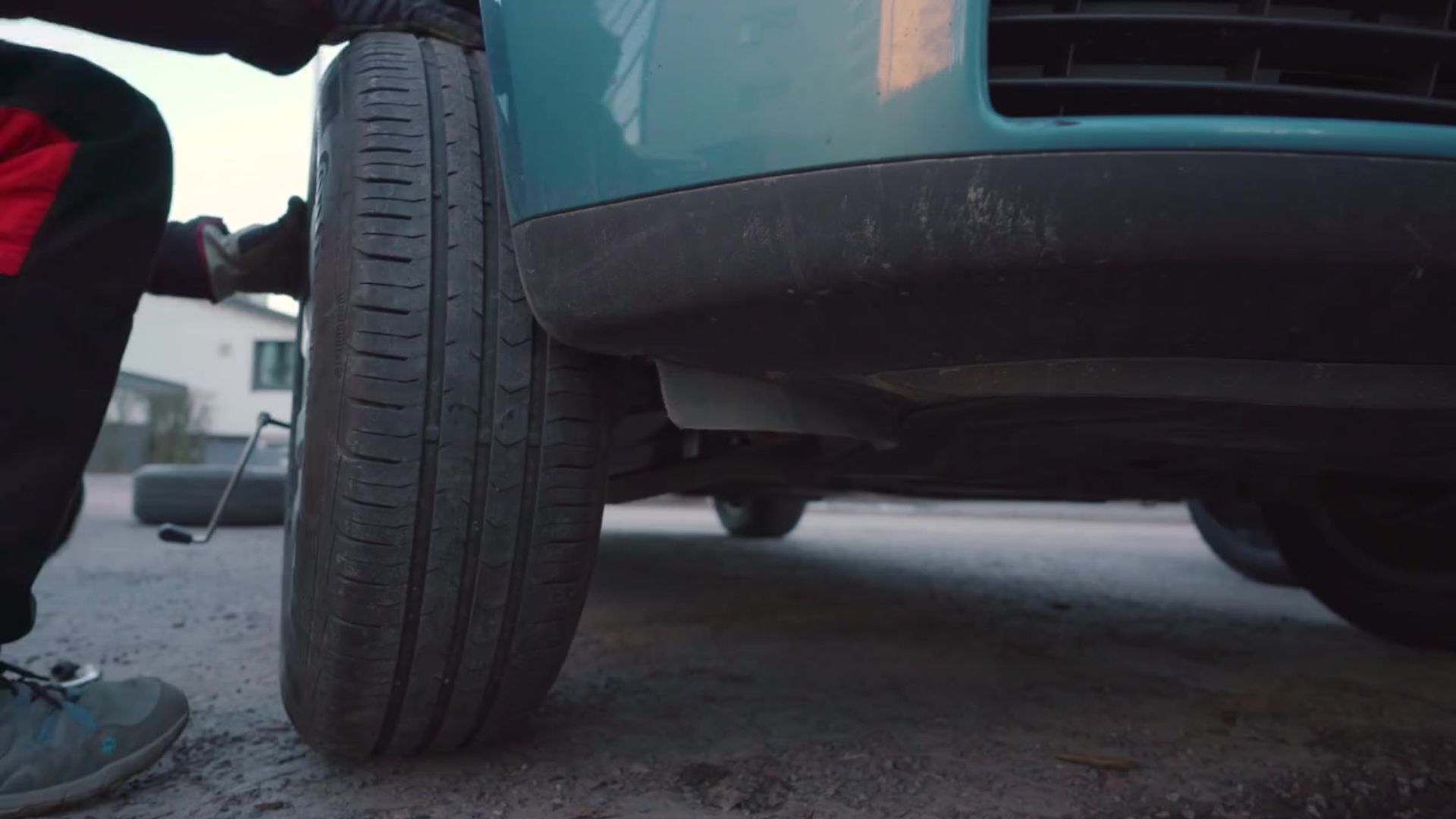
How Can You Stay Safe During a Flat Tire Emergency?
Most of the danger in a flat tire situation isn’t the flat itself. It’s the traffic next to you. A few habits reduce the risk a lot.
On a highway or interstate
- Get as far right as you can, with your wheels turned away from the road.
- Stay off the road side of the vehicle. Exit through the passenger door if you can.
- On a busy interstate like I-465, I-65, I-70, or I-69, many safety agencies advise getting out and standing well away from traffic, behind a guardrail if there is one, rather than staying in a car that could be hit.
- Don’t try to change the tire on a narrow shoulder with fast traffic beside you.
On a city street or in a lot
- If it’s lit and quiet, staying in the locked car is often fine while you wait.
- Keep your hazards on, and don’t stand in the roadway.
At night
- Keep hazards on, and use your phone flashlight only if you can do so away from traffic.
- If you have reflective triangles or a beacon, use them only if you can do it without stepping into traffic.
- Let someone know your location, and share your live location if you can.
In bad weather
- Rain, ice, and snow reduce visibility and traction. Indiana winters and freeze-thaw cycles can be rough on tires and roads.
- If conditions are severe, wait for professional help.
A note on Indiana’s Move Over law
Indiana law (IC 9-21-8-35) requires drivers to change lanes away from stationary emergency vehicles with flashing lights when it’s safe, and to slow down if they can’t. Its protections have expanded over time to cover other roadside vehicles, such as tow trucks and highway crews. Some legal summaries say it now applies to other disabled vehicles displaying hazard lights, but check the current statute if you want details. Either way, don’t count on other drivers moving over for you.
Can Roadside Assistance Help With a Flat Tire?
Yes. A flat tire is one of the most common reasons people call for roadside help. Many providers, including auto clubs, insurers, and independent mobile services, handle it.
There are three broad sources of help:
| Source | What It Typically Offers | Things to Know |
| Membership or insurance roadside plan (AAA, your auto insurer, credit card, carmaker) | Flat tire change with your spare, and sometimes a tow if you can’t be fixed roadside | Coverage limits and call allowances vary. For example, AAA lists tire changes as part of its roadside assistance and limits the number of service calls per membership year. |
| Independent local roadside or mobile tire company | Tire change, plug or patch, replacement tire delivery, and sometimes towing | Pay per call. Ask for the price, the arrival time, and whether the technician carries your tire size. |
| INDOT Hoosier Helpers | Free help on Indiana interstates, including changing flat tires | Interstates only, and hours can vary. Call 855-463-6848 (855-INDOT4U). |
If you already have a plan, call it first and ask what’s covered. If you don’t, an independent provider is often the fastest route.
What Does Flat Tire Roadside Assistance Include?
It depends on the provider and your situation, but most calls fall into these buckets:
- Spare tire installation. The technician removes the flat and installs your spare, using their own equipment if needed.
- Tire repair. A simple puncture in the tread, like a nail or screw, can sometimes be plugged or patched on the spot. The technician decides whether it’s repairable.
- Air. For a slow leak, a technician may reinflate the tire so you can reach a shop.
- Replacement tire delivery and installation. If the tire can’t be repaired and you don’t have a spare, some mobile services can bring a tire and install it at your location.
- Tow. If the tire, wheel, or vehicle can’t be fixed roadside, they may tow you to a shop.
- Related help. Some providers also handle lug nuts that are stripped or locked, and jump starts or lockouts, if those come up.
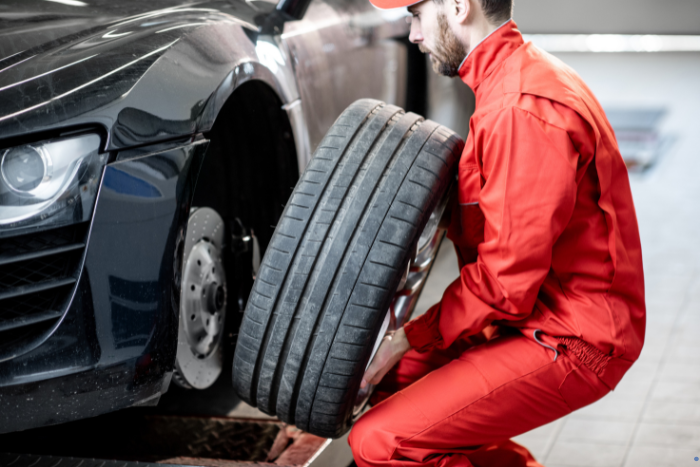
What’s usually not included: the cost of a new tire itself, a wheel repair, or work that requires a shop. Ask what’s covered before you agree.
When Should You Call for Emergency Roadside Assistance?
Call sooner rather than later if any of these apply:
- You’re on a highway or busy road and can’t get far from traffic.
- It’s dark, raining, icy, or you can’t see well.
- You don’t have a spare, or the spare is flat.
- The tire is shredded, or the sidewall is cut or bulging.
- The wheel itself looks bent or damaged.
- You don’t have a jack or lug wrench, or you can’t loosen the lug nuts.
- You’re alone in an unfamiliar or isolated area.
- You have children, pets, or passengers with mobility needs.
- You have a physical limitation or injury that makes the job unsafe.
- You feel unsafe for any reason.
Call 911 instead if the vehicle is in a live lane, there’s been a crash, someone is hurt, or you feel threatened.
Changing a tire yourself is reasonable in a safe spot, like a driveway, a flat parking lot, or a quiet residential street. It’s a bad idea on a narrow interstate shoulder.
Can Roadside Assistance Change a Flat Tire?
Yes, if you have a usable spare. That’s the most common roadside service. The technician typically:
- Positions their vehicle for safety and confirms the location.
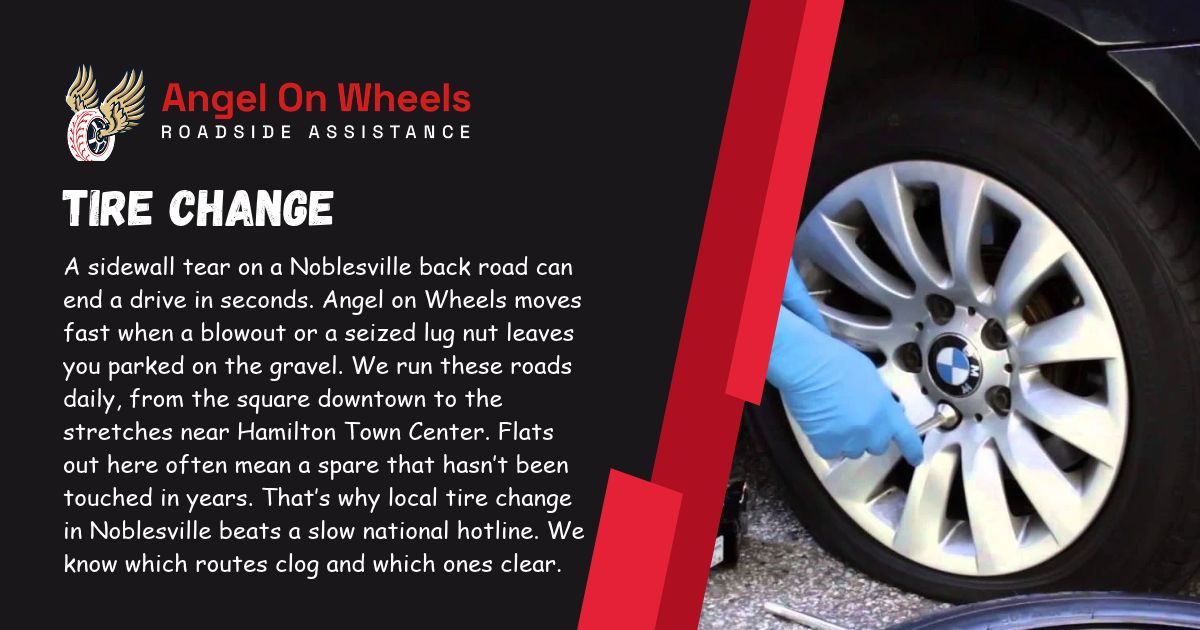
- Loosens the lug nuts, lifts the vehicle with a jack at the correct lift point, and removes the flat.
- Mounts the spare and tightens the lug nuts, usually in a star or crisscross pattern.
- Lowers the vehicle and checks the spare’s air pressure.
- Advises you on driving limits and next steps.
A quick word on compact spares. Many temporary “donut” spares are designed for limited speed and distance, often around 50 mph and 50 miles, though your spare’s sidewall and owner’s manual give the real limits. They also need the right inflation pressure. Drive to a tire shop as soon as you can and get the original tire repaired or replaced.
DIY or call?
| DIY | Call for Help | |
| Best when | You’re in a safe, flat, low-traffic spot and know how |
You’re on a highway, it’s dark or stormy, or you lack tools |
| Cost | Low if you have the tools | Often a per-call fee, or included in a plan |
| Time | 15 to 60 minutes depending on experience | Waiting time plus the service itself |
| Risk | Higher near traffic or on soft ground | Lower, but you still need to stay safe while waiting |
What If You Have No Spare Tire?
This is more common than people think. Many newer vehicles come with a tire inflator and sealant kit, or run-flat tires, instead of a spare. Check your trunk floor and owner’s manual to see what you have.
Here’s how the options compare.
| Situation | What It Means | Next Step |
| Small puncture in the tread (nail, screw) | May be sealable or repairable | A sealant and inflator kit may get you to a shop, or a technician can plug or patch it |
| Sidewall damage, large hole, or blowout | Usually not repairable roadside | Call for a tow or a replacement tire |
| Run-flat tires | Designed to be driven a limited distance at reduced speed after a puncture | Follow your manufacturer’s limits, often around 50 mph and 50 miles, and get to a shop |
| No spare, no kit | You can’t safely drive on the tire | Call a mobile tire service or tow truck |
Using a sealant kit. These are temporary fixes. They work on some small tread punctures, not on sidewall damage. Tell the tire shop you used sealant, since it can complicate the repair. Never drive on a tire that’s fully flat.
Mobile tire service. Some Indianapolis providers will bring a replacement tire to your location and install it. Ask whether they have your size in stock and get the total price before you agree.
The tow option. If the tire is beyond roadside repair and no replacement is available, a tow to a tire shop is the safe choice.
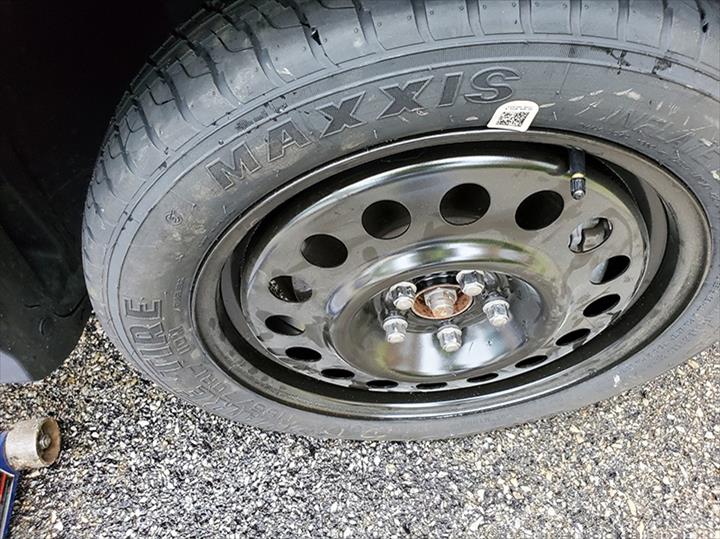
How Does 24-Hour Roadside Assistance Work?
The basics are similar across providers.
- You call or request service online or through an app. Give your name, phone number, and exact location.
- Describe the problem. Say it’s a flat tire, whether you have a spare, and your vehicle’s make, model, and year. If you can, give the tire size (it’s printed on the sidewall).
- Get a quote and an estimated arrival time. If it’s a paid call, ask for the total price.
- A technician is dispatched. Many companies text or call with updates.
- The technician arrives and checks the situation. They confirm the vehicle and the problem, then get to work.
- You pay or the call is billed. With a membership or insurance plan, the provider may bill your plan. Otherwise you pay per call.
“24-hour” means the company takes calls and dispatches at all hours. That doesn’t guarantee an instant response. Storms, holidays, and rush hour can slow things down.
What to have ready:
- Your exact location (street and cross street, or highway, direction, and mile marker or exit)
- Vehicle details
- Whether you have a spare, and whether you have the jack and lug wrench
- Any locking lug nut key
- A phone number that will be answered
How Long Does Flat Tire Assistance Usually Take?
There’s no single number. Arrival times depend on the provider, your location, the time of day, and how busy dispatch is. Some local companies advertise arrival times in the 20 to 40 minute range for the Indianapolis area. General guides often say to expect roughly 30 to 60 minutes, and longer in bad weather or remote areas. Treat both as estimates, not promises.
What affects it:
- Distance from the nearest available technician
- Time of day and demand, especially rush hour and storms
- Your location, since interstates and rural roads can take longer
- Service type, since a replacement tire delivery can take longer than a spare swap
Once the technician arrives, a straightforward spare change often takes around 15 to 30 minutes, though the time varies.
Tips: Ask the dispatcher for an estimate and ask them to call if it changes. If it’s been much longer, call back.
What Should You Do While Waiting for Roadside Assistance?
The wait is often the riskiest part. Here’s what helps.
- Stay put and stay visible. Keep hazard lights on.
- Decide where to wait. On a busy interstate, stand away from the roadway and behind a barrier if possible. In a quiet area, staying in a locked car may be better.
- Keep your phone charged. Turn down the brightness and close apps.
- Confirm who’s coming. Ask for the company name and technician details, then check that the truck and uniform match.
- Don’t accept help from strangers if you feel uneasy. A polite “help is on the way” works.
- Prepare the vehicle. Have your keys, the locking lug nut key if you have one, and your owner’s manual ready.
- Stay hydrated and comfortable. In summer, wait in shade or with the windows cracked if you’re in the car. In winter, layer up.
- Don’t run the engine in a closed space or with the exhaust blocked.
- Watch traffic. If a vehicle seems to be drifting toward you, move farther away.
How Much Does Roadside Assistance for a Flat Tire Cost in Indianapolis?
Prices vary by provider, time of day, and what you need. Here are some ballpark numbers, and they’re not quotes.
| Option | Typical Range (Examples from Public Sources) | Notes |
| Membership or insurance plan | Included, or roughly $50 to $150 per year for a membership | Limited number of calls per year on many plans |
| Pay-per-call tire change (spare swap) | Often about $50 to $150 nationally. One Indianapolis provider lists a flat fee of $65 | Labor only, not the price of a new tire |
| Tire plug or patch | Often in the range of tens of dollars, with one Indianapolis provider listing $75 for mobile tire repair | Only works on repairable punctures |
| Mobile replacement tire | One Indianapolis provider lists about $225 to $365 for a tire and installation | Depends on tire size and brand |
| Hoosier Helpers | Free | Interstates only, and hours vary |
Questions to ask before you agree:
- What’s the total price, including any after-hours or distance fees?
- How long until you arrive?
- Do you carry my tire size if I need a replacement?
- What forms of payment do you accept?
- What happens if the tire can’t be repaired?
What About Free Help on Indianapolis Interstates?
INDOT runs the Hoosier Helper Safety Service Patrol, sponsored by GEICO, which assists stranded motorists on Indiana interstates, including in the Indianapolis area. Its services include changing flat tires, minor mechanical fixes, small amounts of fuel, and traffic control. It’s free, and you can request help by calling 855-463-6848 (855-INDOT4U).
A few caveats: it’s limited to interstates, and program hours have varied by source, so don’t assume it’s available at 2 a.m. If you’re on an interstate, calling 911 for safety issues is still the right move. For anything urgent or off the interstate, use a roadside provider.
Frequently Asked Questions
Can I drive on a flat tire to get somewhere safer?
Only a short distance at very low speed, if it’s needed to get out of danger. Driving on a flat can ruin the tire and damage the wheel, and it makes the vehicle harder to control.
Can I use roadside assistance if I don’t have a membership?
Yes. Many independent companies take pay-per-call requests. Ask for the price upfront.
Will insurance cover a flat tire?
Only if you have roadside assistance coverage or a related benefit on your policy. Standard coverage typically doesn’t pay for tire repair or replacement from ordinary wear or road hazards. Check your policy.
What if my tire keeps going flat after a repair?
Get the tire, wheel, and valve inspected at a tire shop. A repeated leak can mean a bad repair, a damaged wheel, or another cause.
Should I replace all four tires after a flat?
Not necessarily. It depends on tread depth, tire type, and your vehicle. All-wheel-drive vehicles can be more sensitive to mismatched tires. A tire shop can advise you.
How can I prevent flat tires?
Check pressure monthly, inspect for nails or bulges, rotate tires on schedule, and replace worn tires. Potholes, especially after winter, are a common cause of tire damage.
Is it safe to use a tire sealant?
For small tread punctures, it can work as a temporary fix. It isn’t for sidewall damage or large holes. Tell the tire shop you used it.
What should I keep in my car?
A charged phone charger, flashlight, reflective triangles or flares, tire inflator, gloves, owner’s manual, and a locking lug nut key if your car has locking nuts. Check that your spare is inflated.